
Discover · Occitania
Bouches-du-Rhône & the Gard
Roman remains, the wild Camargue and medieval villages.
The Gard, a sun-drenched department of the Occitanie region, charms with its diversity. From the Roman remains of Nîmes (the Arena, the Maison Carrée) to the stunning landscapes of the Gorges du Gardon and the Pont du Gard, and on to charming medieval villages like Uzès and Aigues-Mortes, the Gard offers a unique blend of cultural heritage, unspoilt nature and Provençal art of living.
Arles & the Camargue
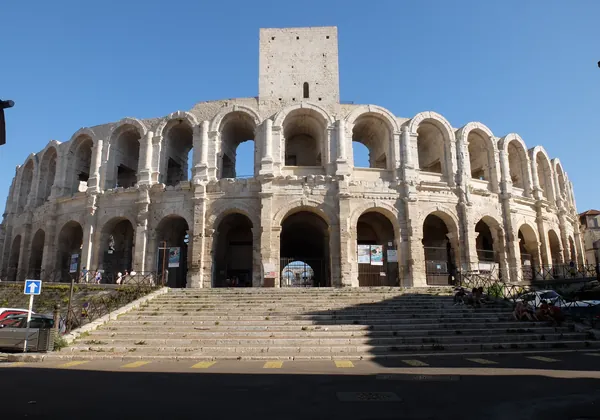
These renowned towns include Arles, the city of Vincent Van Gogh, with its Roman arena and amphitheatre and the Venus of Arles; Aigues-Mortes, the town bought by King Louis IX (Saint Louis) to become the crusade departure port, with 1,500 ships sailing to Jerusalem; and Saintes-Maries-de-la-Mer, at the heart of the Camargue Natural Park, where the relics of Saint Sara rest.
Legend has it that the Jews expelled from Jerusalem landed here in boats without sail or oar. Saint Martha, Mary Magdalene and Lazarus became three saints greatly venerated throughout Provence. The fortress-church is typical of the medieval period (11th–15th centuries).
Book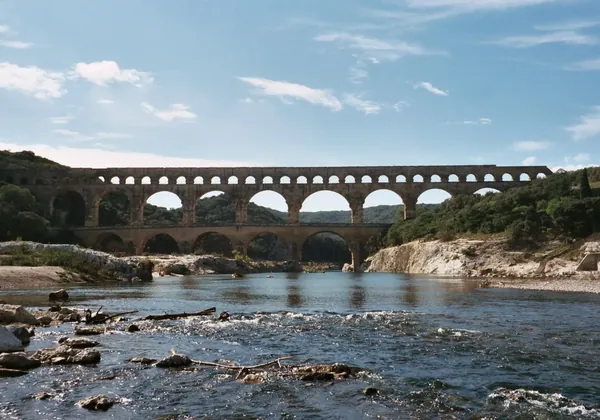
The Pont du Gard
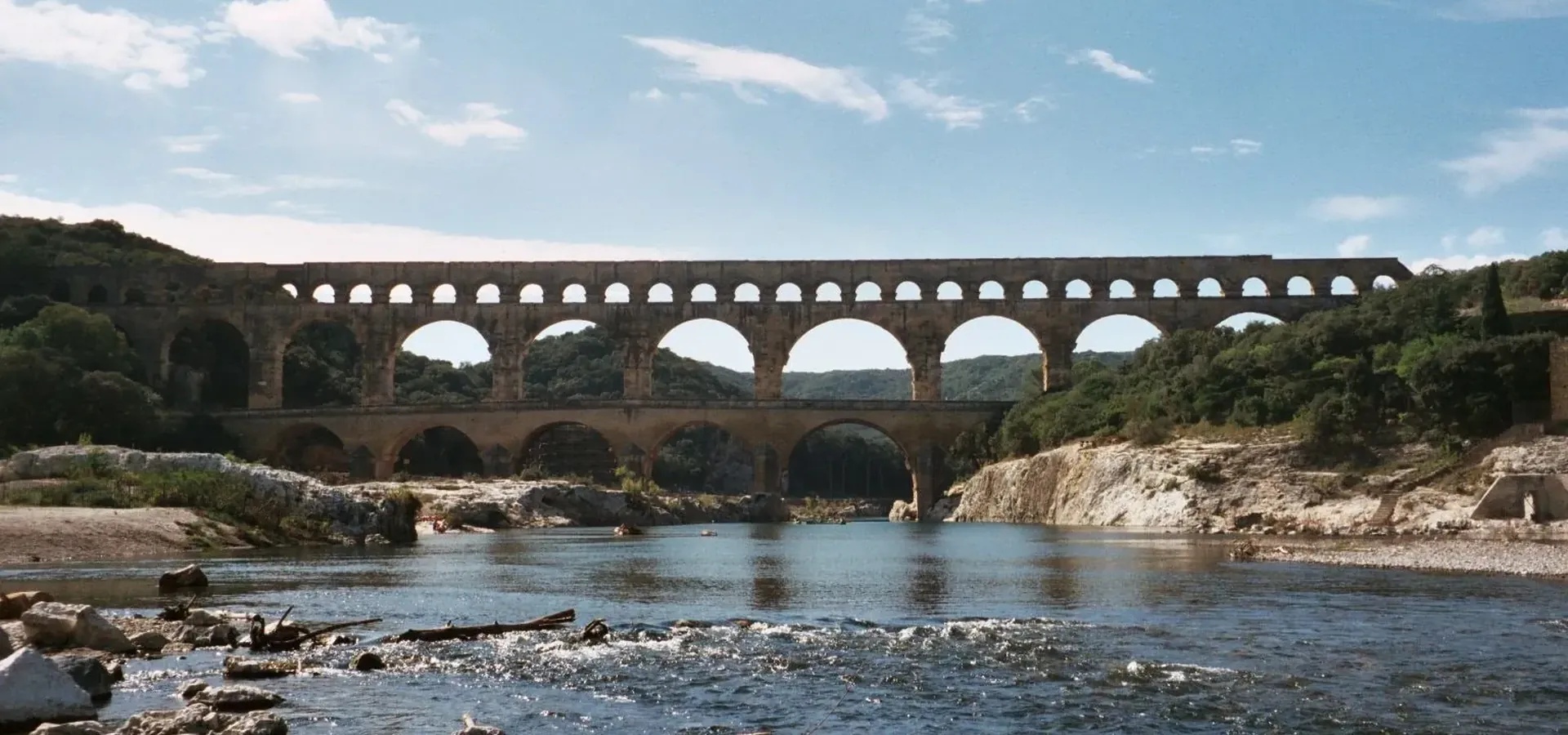
Built by emperors Nero and Claudius between AD 40 and 60, the Pont du Gard is a colossal aqueduct, one of the greatest architectural monuments of all time. Running 50 km from Uzès to Nîmes, it carried water from the Eure spring (at Uzès) to supply Nîmes (Nemausus) — its thermal baths and fountains — at a rate of 20,000 m³ a day.
From the 4th century the aqueduct fell into disuse; by the 9th century limestone deposits blocked the channel and its stones were reused for building. In the 18th century a road was built across the Gardon. The Pont du Gard rises 48.77 m above the Gardon over 275 m, with 6 arches on the lower level, 11 on the middle and 35 at the top.
Book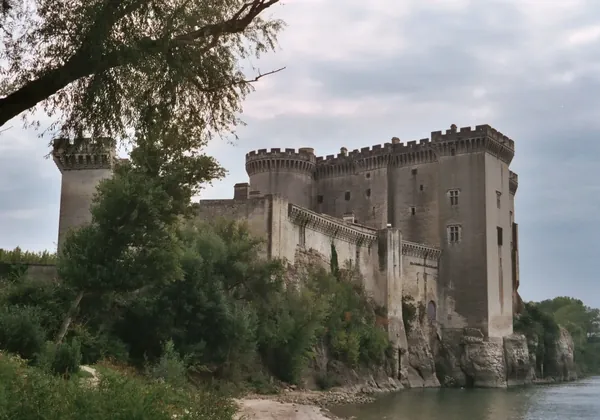
Beaucaire & Tarascon
These twin towns, peaceful on the banks of the Rhône, face each other with their respective castles. A strategic Rhône crossing since antiquity: under the Roman Empire it marked the great ancient roads — west to Spain, north to Lyon and Paris, east to Rome. The site later became the border between the Kingdom of France (Beaucaire) and the County of Provence (Tarascon). At the Sainte-Marthe collegiate church, Clovis, the first Merovingian king, converted to Christianity under the influence of his wife Clotilde and Archbishop Saint Remigius, and was miraculously healed.
The relics of Saint Martha (sister of Mary Magdalene and Lazarus) rest in the crypt. Legend says the Saints landed at Saintes-Maries-de-la-Mer at the dawn of Christianity in France; Saint Martha tamed the monster, the Tarasque, which gave its name to Tarascon. As for the magnificent moated castle of good King René of Anjou, it served as a prison during the Revolution.
BookKeen to explore the Gard?
Let's design your private tour through Roman heritage and the Camargue.
Request a quote